Clinical Applications
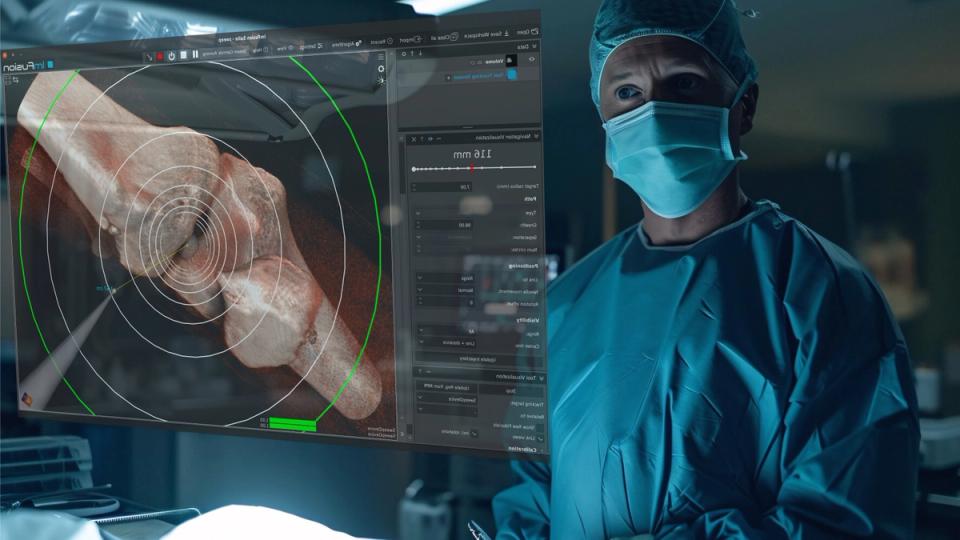
Advancing image-guided interventions
We make your bold idea possible...
We specialize in the complex problems behind minimally invasive, image-guided interventions across all clinical application domains. Whether your idea involves automated planning, live image fusion, miniature tracked devices, or robotic assistance, we bring together the expertise and technology to test it, build it, and move it toward clinical use.
... across the full clinical workflow
We connect preoperative images and plans with the patient, live imaging, and medical devices during the intervention. The result is a workflow designed to help clinical teams maintain orientation, guide instruments, and access the right information at each stage of the procedure.
Support wherever your workflow needs it and across diverse clinical application domains
World-leading technology at every step
Prepare the intervention
Build a patient-specific understanding of the anatomy and use it to prepare the procedure.
AI-based planning and patient models
We use AI to identify relevant anatomy and pathology, automate planning steps, and create a digital representation containing segmentations, landmarks, measurements, and planning information.
Connect plan and procedure
Transfer preoperative information into the treatment room and update it with data acquired during the intervention.
Preoperative-to-intraoperative registration
We align images and plans with the patient using landmarks, surfaces, live images, or tracking data. Deformable registration can account for changes in patient position and anatomy.
Live imaging and data fusion
We combine preoperative information with ultrasound, X-ray, CT, cone-beam CT, or endoscopic video. This provides a shared view of information acquired before and during the procedure.
Guide and assist during the intervention
Use live imaging and spatial information to support the clinical team while the procedure is taking place.
Device tracking and visual guidance
We track instruments such as needles, guidewires, catheters, endoscopes, and surgical tools and display them in relation to anatomy, targets, trajectories, and structures at risk.
Real-time image understanding
We apply image processing and AI to live data to detect anatomy and devices, maintain relevant views, and provide measurements during the procedure.
Robotics and physical AI
We connect imaging and perception with robot control to support defined procedural tasks. This includes visual servoing and learning-based approaches while keeping the clinical professional in control.
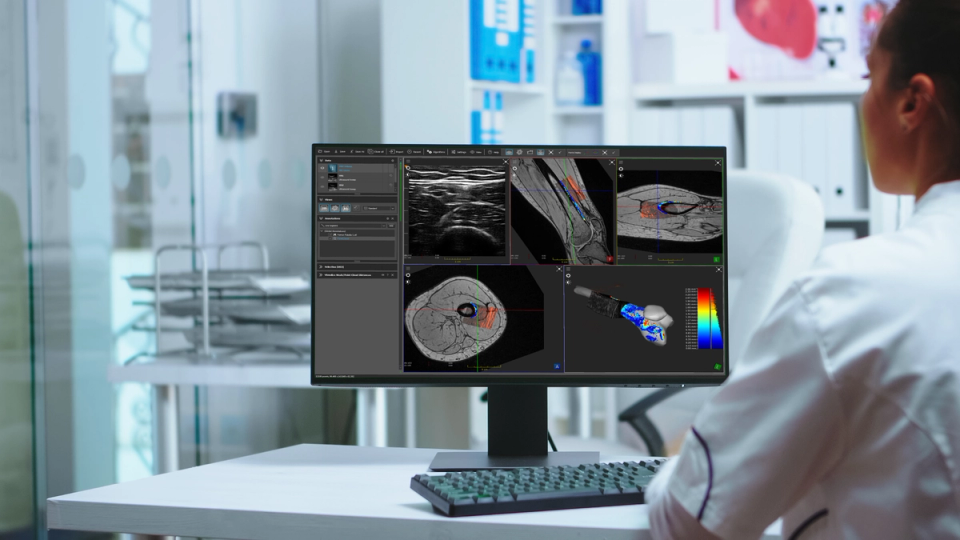
Explore examples of clinical applications we have supported
Automated planning and navigation for spinal surgery
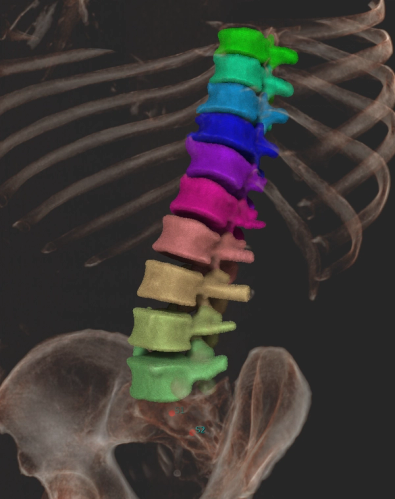
We enabled automated spine segmentation from CT, MRI, and CBCT, patient-specific planning, and per-vertebra intraoperative registration. Our X-ray-to-CT registration and CBCT fusion workflows connect the surgical plan with the patient for accurate and efficient guidance.
Ultrasound-guided cranial access
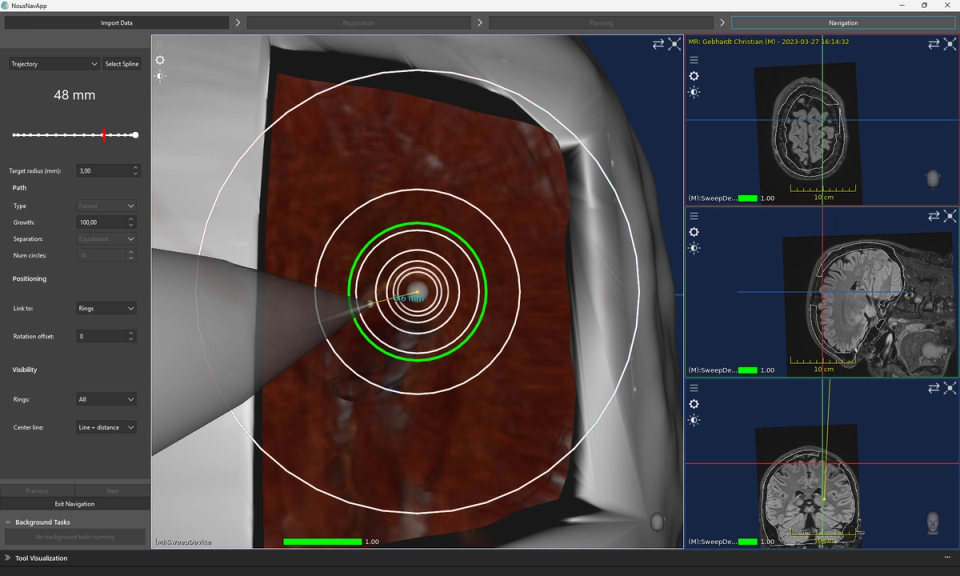
We developed the imaging workflow for a compact 3D ultrasound system used through a small cranial opening. Automated anatomical reconstruction and needle guidance provide the spatial information needed to navigate toward targets despite the limited field of view.
Robotic ultrasound for structural heart interventions
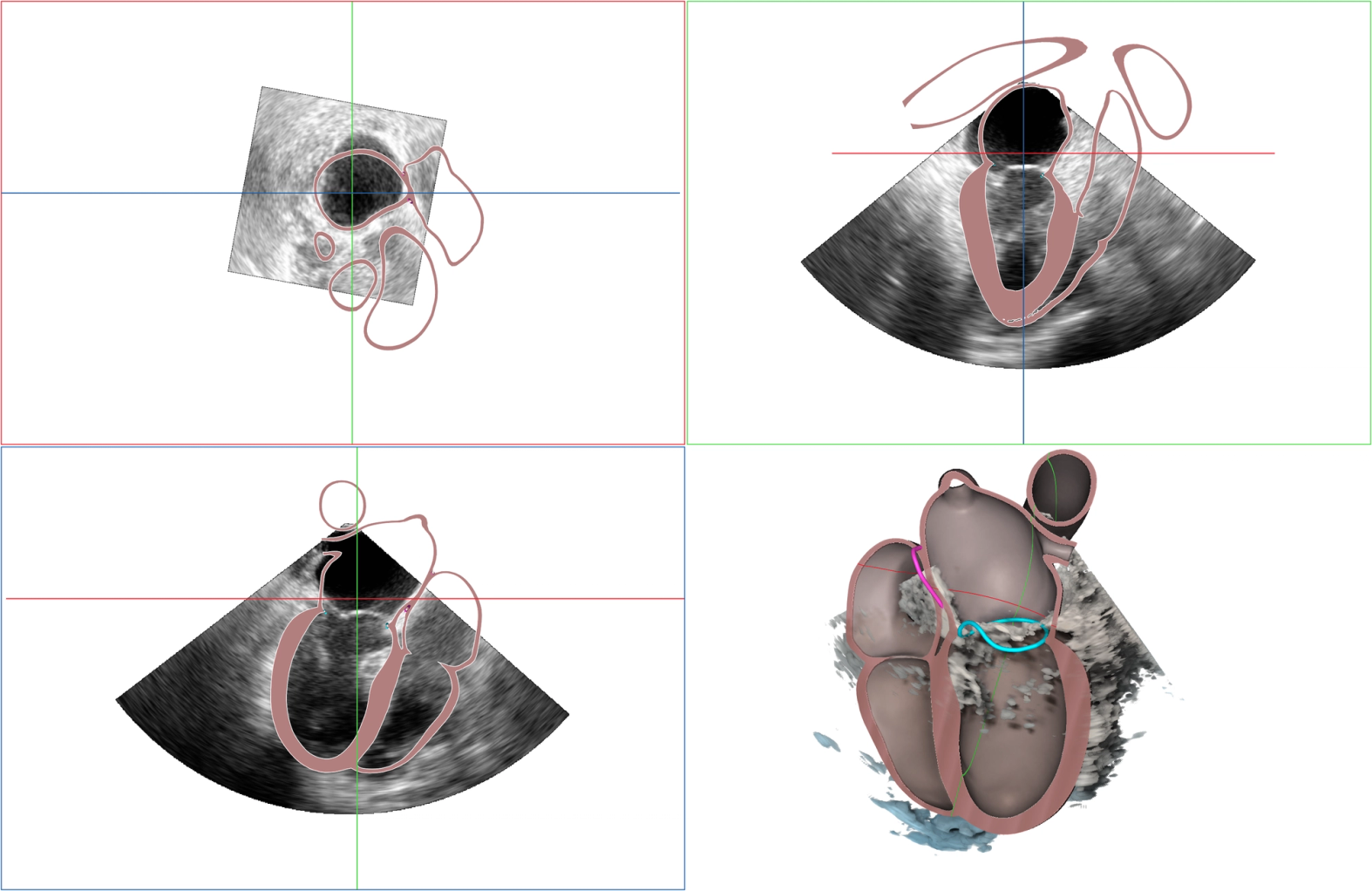
We developed real-time anatomical modelling that creates and updates a patient-specific 3D heart representation from live TEE ultrasound. It provides the spatial information needed for robotic probe navigation, maintaining relevant views, and guiding implant placement.
Image-guided precision treatment for tumors
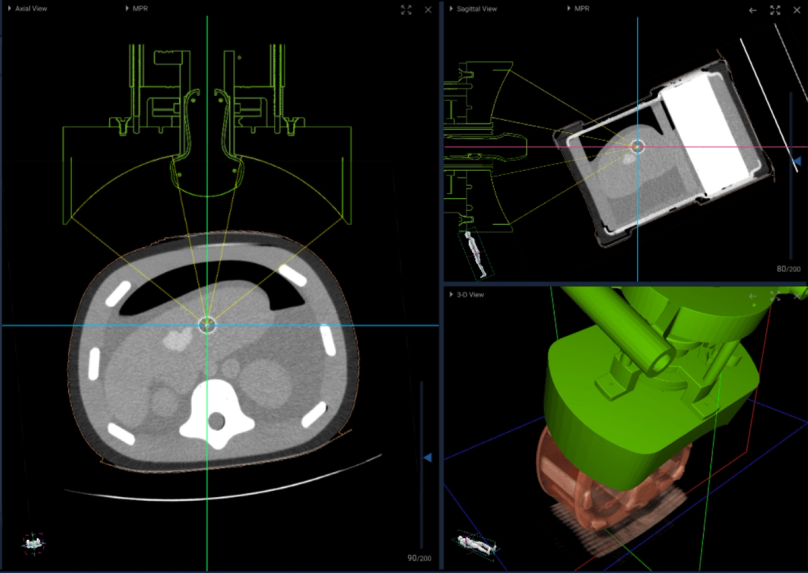
We enabled an oncology treatment platform to combine preoperative plans with three-dimensional ultrasound acquired by a robot in the treatment position. Our registration methods account for changes in patient position and tissue shape to locate the target despite limited imaging during the procedure.
Robotic instrument handling in the operating room
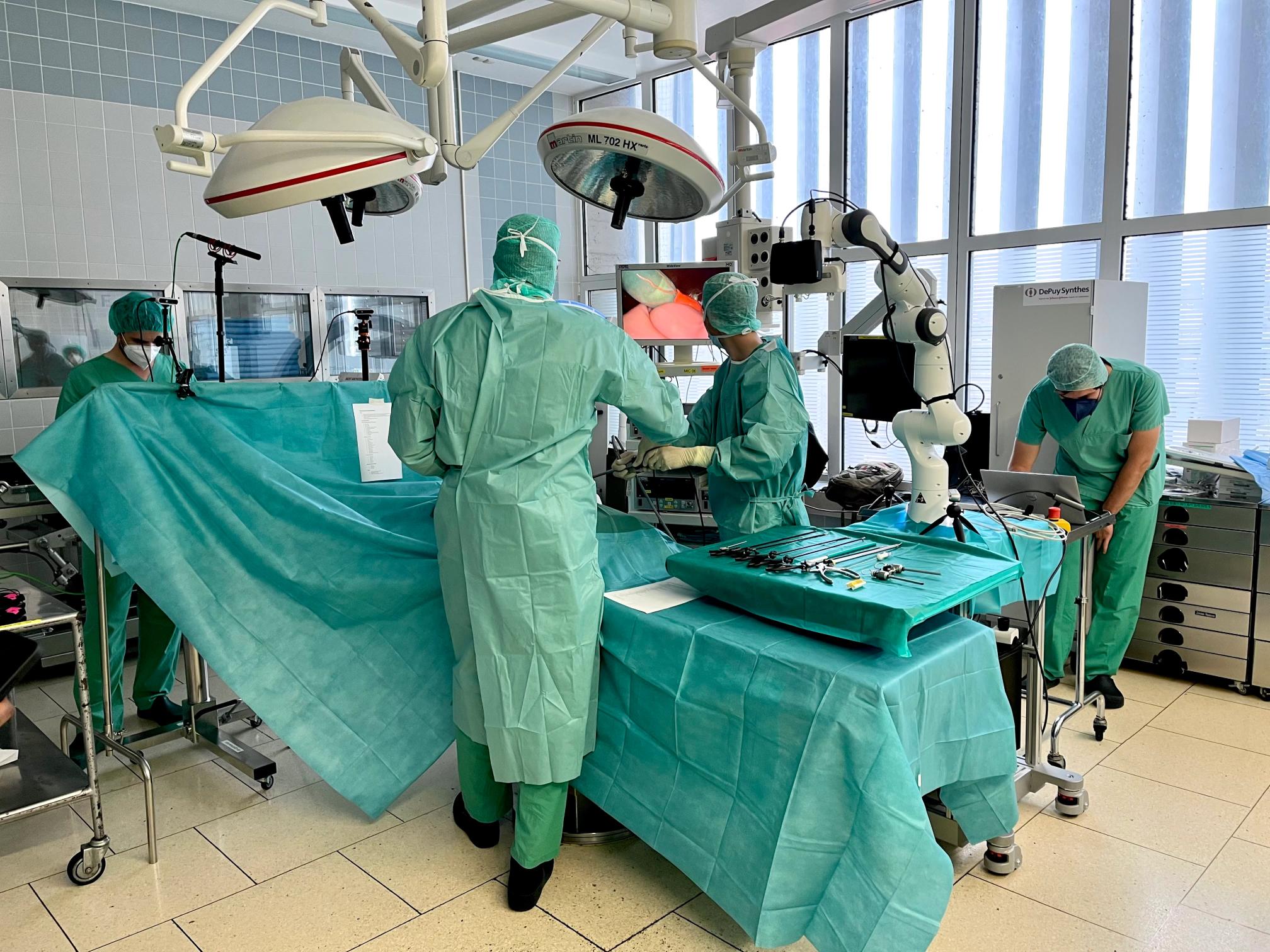
We helped build a robotic assistant that could recognise, pick up, hand over, and receive surgical instruments. We connected three-dimensional cameras, artificial intelligence, motion planning, and robot control in an integrated demonstrator tested with surgeons.
Our technology in clinical use
ImFusion technology is integrated into medical devices used in hospitals and clinics. It provides imaging, analysis, planning, and guidance capabilities for real clinical workflows—bringing our software from development into patient care.
>4000
productive devices with ImFusion technology
We offer two types of introductory calls so we can make sure we’re speaking to the right audience.
Product Demo
In a product demo, we show you how the ImFusion Suite, SDK, and ImFusion Labels support medical imaging and data annotation workflows. We focus on the capabilities relevant to your application and discuss directly how our technology could fit into your product or support your use case.
- See integration points mapped to your specific tech stack
- Identify bottlenecks before committing development resources
- Validate data format compatibility and transformation requirements
- Get immediate answers from engineers who built the system
Discovery Call
In a discovery call, we learn about your clinical or technical challenge and discuss how ImFusion’s expertise and technology could help make your idea a reality. Together, we identify promising first steps and determine where we can add the most value.
- Identify technical risks and regulatory considerations early
- Align engineering, clinical, and business stakeholders quickly
- Get a realistic timeline and resource estimate
- Leave with actionable next steps, not vague promises