Funded Projects
Explore the collaborative research projects we are proud to contribute to
Staying close to academia and the research community is an important part of who we are. We value the exchange of ideas, expertise and perspectives that comes from working with researchers, clinicians and industry partners.
Through collaborative funded projects, we explore new technologies, tackle research challenges and turn new ideas into practical solutions.
RACOON
Radiological Cooperative Network
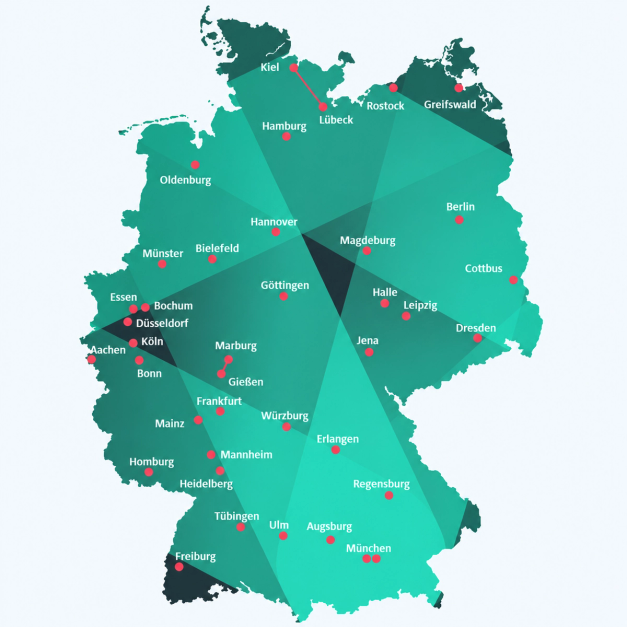
- RACOON is Germany's nationwide infrastructure for collaborative radiological imaging research. It connects all 39 university hospitals through a federated network, enabling secure multicenter studies with standardized medical imaging data and supporting AI development, image analysis, and quantitative imaging research.
- Grant number: NUM 3.0 (01KX2524)
- Status: ongoing
- Funding: Funded by the Bundesministerium für Forschung, Technologie und Raumfahrt (BMFTR) within the NUM
- Goal: To establish a sustainable, interoperable infrastructure for nationwide research using imaging data, making multicenter imaging studies easier, faster, and more reproducible
- ImFusion’s role: We contribute our Labels and Suite software for annotation, segmentation, image processing, and multimodal data visualization. Our tools support AI development and efficient image analysis workflows within the RACOON infrastructure.
- Consortium: University clinics nationwide; Mint Medical; Fraunhofer MEVIS; DKFZ; Firemetrics





SASHA-OR
Situation Aware Sterile Handling Arm for the OR
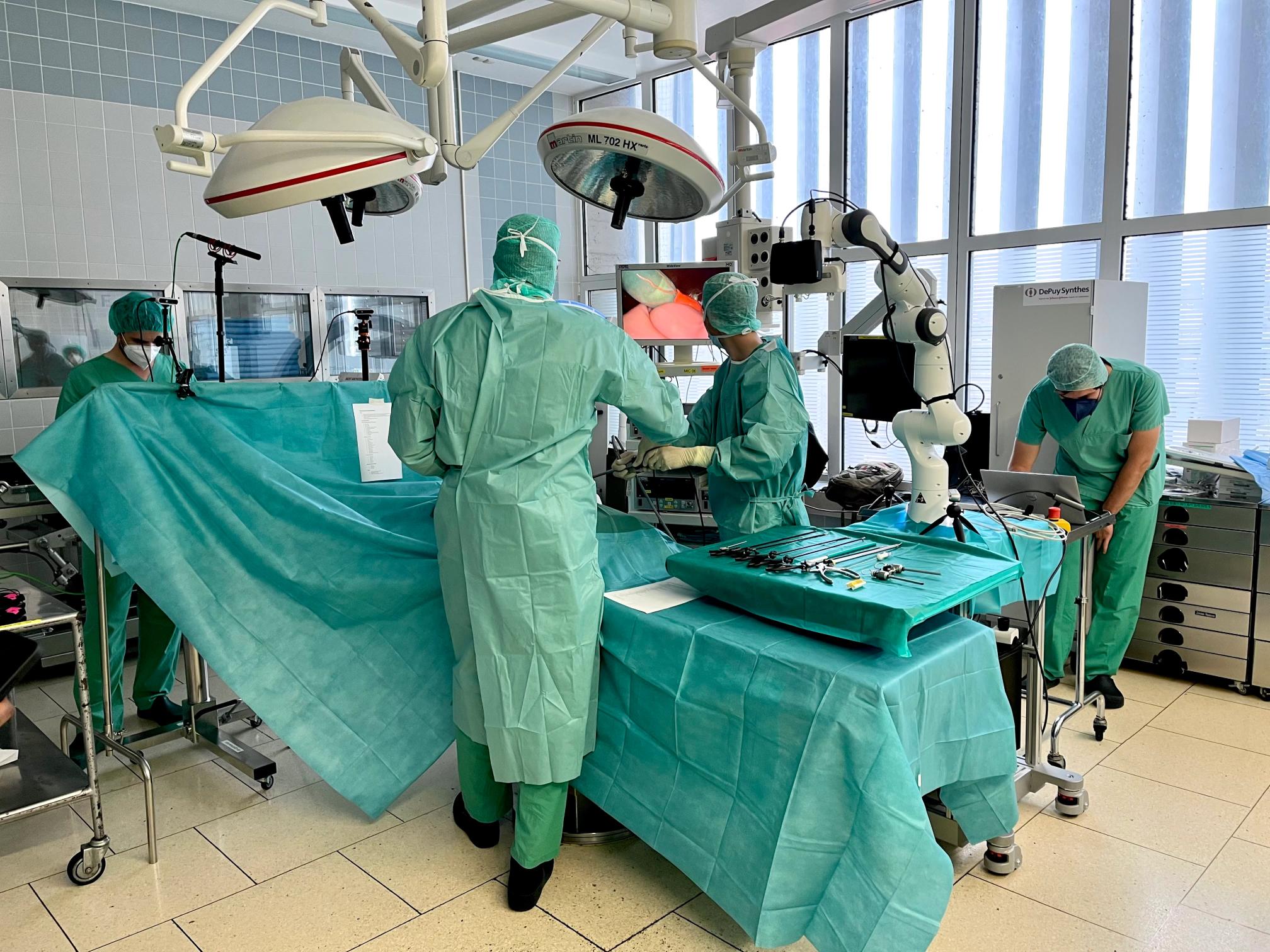
- SASHA-OR developed an intelligent robotic assistance system that operates in the sterile field at the operating table. The project combines computer vision, collaborative robotics, voice interaction, and workflow awareness to autonomously manage, deliver, and retrieve surgical instruments during laparoscopic procedures, acting as a robotic scrub nurse while keeping the surgical team in control.
- Grant number: DIK-2104-0079
- Status: finished
- Timeframe: 2021-2025 (42 months)
- Funding: Funded by Bayerisches Staatsministerium für Wirtschaft, Landesentwicklung und Energie as part of the program BayVFP Förderlinie Digitalisierung
- Goal: Demonstrate a safe, situation-aware robotic assistance system for sterile instrument handling
- ImFusion’s role: We developed the perception, planning, and system-integration software. This included RGB-D instrument detection and 6DOF pose estimation, a 3D instrument database, real-time mapping of the OR, collision-aware motion planning, ROS-based integration of the robot, and a voice-control interface.
- Outcome: The consortium demonstrated a functional robotic scrub-nurse with instrument recognition, grasp-pose estimation, collision-aware path planning, and voice control. A user study with surgeons indicated high acceptance for assistance during complex procedures. ImFusion integrated ROS-based robotics and computer-vision components into the ImFusion Suite, including APIs for robot control, motion planning, and AI-based object recognition. The system was also connected to the related AURORA assistance robot via a shared ROS network.





SaveCut
Robotisch-assistiertes Laseroperationssystem für die sichere Spinalkanalstenosen-Chirurgie - Robot-assisted laser surgical system for the safe treatment of spinal canal stenosis
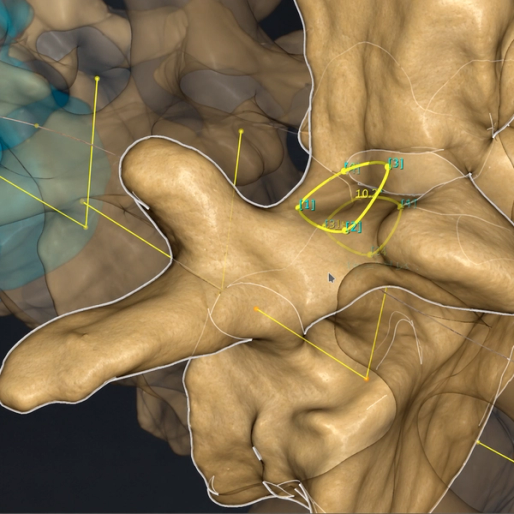
- SaveCut aims to develop a robot-assisted laser surgery system for the treatment of spinal canal stenosis. The project combines laser-based bone cutting, optical coherence tomography (OCT), collaborative robotics, image-guided navigation, AI-based image segmentation, and surgical planning to enable precise and safe bone removal close to critical neural structures.
- Grant number: 13GW0725F
- Status: ongoing
- Timeframe: 2024-2027 (36 months)
- Funding: Funded by the German Federal Ministry of Education and Research (BMBF) under the funding initiative "Neue Therapieoptionen durch innovative Medizintechnik"
- Goal: To demonstrate a robot-assisted laser surgery system that enables precise, minimally invasive bone cutting while preventing injuries to the spinal cord and nerve roots through real-time optical monitoring and navigation. The project concludes with a proof of concept using human spine specimens as the basis for subsequent clinical translation
- ImFusion’s role: We develop the preoperative planning and navigation software. This includes multimodal image fusion (CT/MRI), AI-based segmentation of the spine and critical anatomical structures, surgical trajectory planning, real-time image-guided navigation and tracking, risk visualization, and integration with the robotic assistance system for image-guided laser surgery.
- Consortium: KLS Martin; ImFusion; NEURA Robotics; Fraunhofer Institute for Laser Technology (ILT); Amphos; University Hospital Aachen (UKA)




ASSIST
Autonomous System for Surgeon Initiated Traction
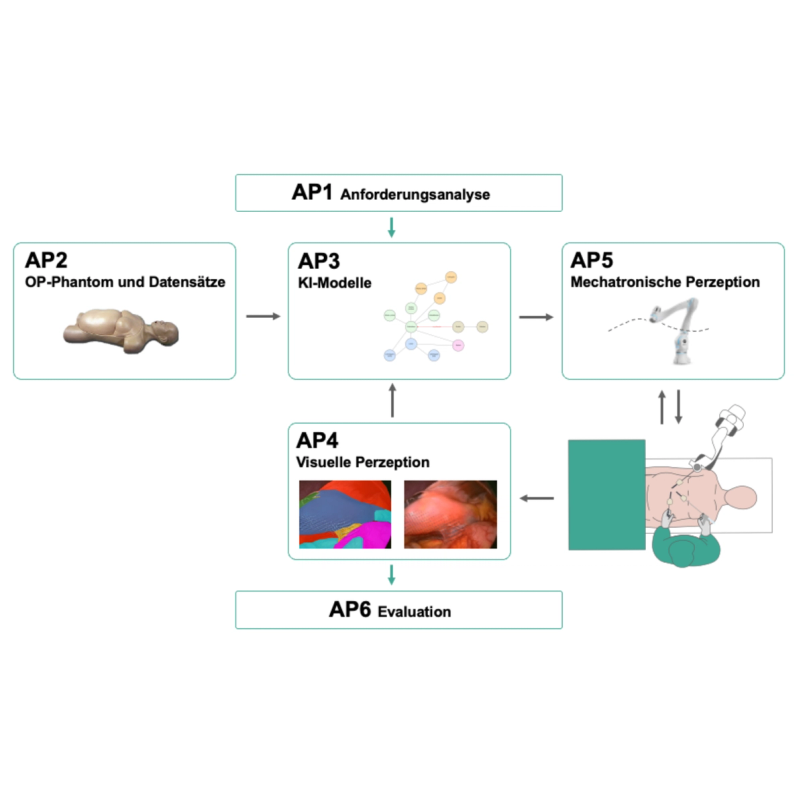
- ASSIST aims to develop a surgeon-controlled autonomous robotic assistance system for laparoscopic surgery. The project combines AI, computer vision, 3D reconstruction, tissue tracking, and robotic path planning to enable autonomous tissue grasping, retraction, and exposure while keeping the surgeon in control of activation.
- Grant number: DIK0693/03
- Status: ongoing
- Timeframe: 2025–2027 (36 months)
- Funding: Funded by Bayerisches Staatsministerium für Wirtschaft, Landesentwicklung und Energie as part of the program BayVFP Förderlinie Digitalisierung – Informations- und Kommunikationstechnologie
- Goal: To demonstrate a safe, AI-assisted robotic system for autonomous tissue manipulation that supports surgeons during minimally invasive procedures. The project concludes with the evaluation of a functional demonstrator in realistic surgical scenarios
- ImFusion's role: We lead the development of the visual perception pipeline, including stereo camera calibration, real-time 3D reconstruction, SLAM, tissue tracking, deformable surface registration, and robot-camera calibration. We also contributes to data preparation, AI-based structure recognition, hardware integration, path planning, and system evaluation.
- Consortium: Munich Institute of Innovative Technology in Medicine (MITI), TUM; ImFusion; NEURA Robotics

ForNeRo
Nahtlose und ergonomische Integration der Robotik in den klinischen Arbeitsablauf - Seamless and Ergonomic Integration of Robotics into Clinical Workflows
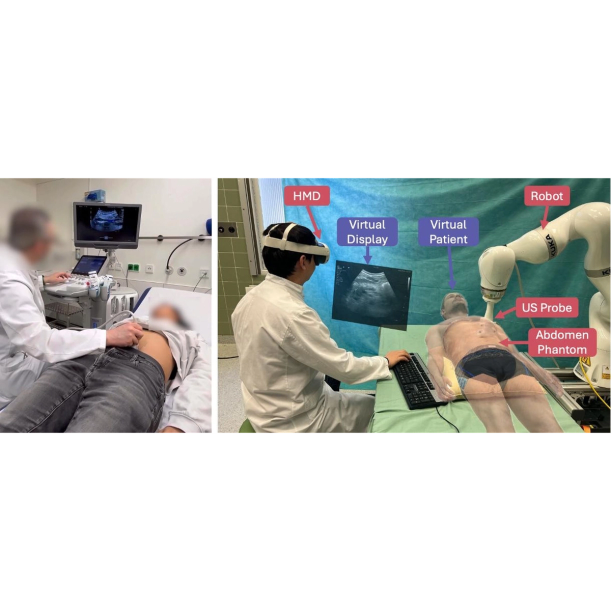
- ForNeRo aims to improve the integration of robotic systems into clinical workflows. The project combines robotics, medical imaging, computer vision, augmented and virtual reality, workflow analysis, and human-machine interaction to develop ergonomic and intuitive solutions for robotic-assisted surgery across multiple clinical application scenarios.
- Grant number: AZ-1592-23
- Status: ongoing
- Timeframe: 2023–2026 (39-month project)
- Funding: Funded by the Bayerische Forschungsstiftung (Bavarian Research Foundation)
- Goal: To develop technologies and methods that enable the seamless, ergonomic, and user-friendly integration of robotic systems into clinical practice, improving workflow efficiency, safety, and acceptance while supporting a wide range of robotic-assisted interventions
- ImFusion's role: We contribute expertise in medical image processing, computer vision, 3D reconstruction, and image-guided robotics. The project supports the further development of our software platform for robotic ultrasound planning, workflow integration, and image-guided robotic applications.
- Consortium: Chair for Computer Aided Medical Procedures & Augmented Reality (CAMP), TUM; ImFusion; Bayerische Forschungsstiftung


PRECISEnode
Präzisionsdiagnostik und KI-gestützte Navigation für smartes chirurgisches Management von Lymphknotenmetastasen - Precision diagnostics through AI-supported navigation for smart surgery management of lymph node metastasis
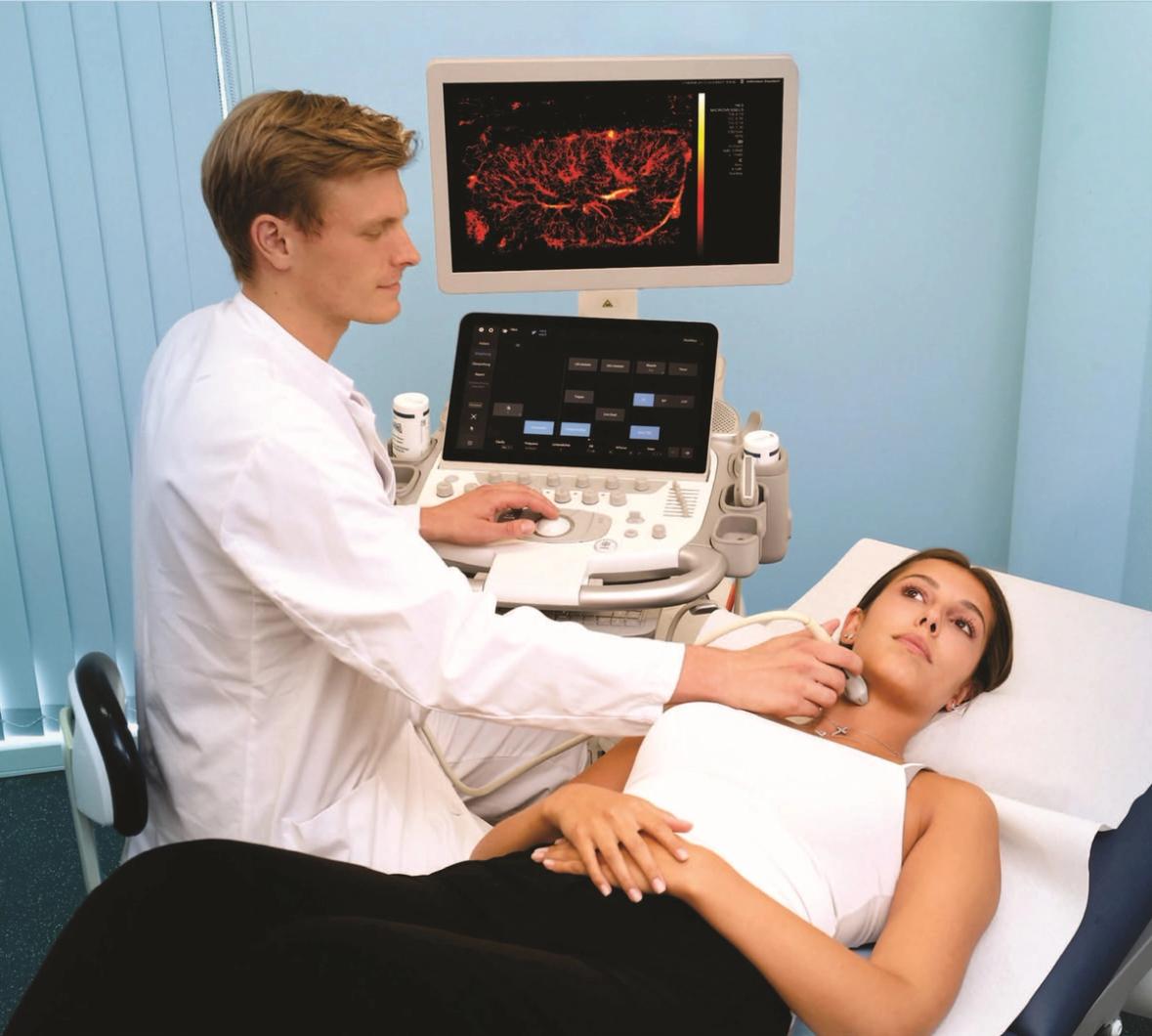
- PRECISEnode develops AI-assisted imaging and navigation technologies for the precise identification and selective removal of metastatic lymph nodes in patients with head and neck cancer. The project combines advanced ultrasound imaging, multimodal image registration, AI-based image analysis, and intraoperative decision support to enable more targeted and minimally invasive surgical treatment.
- Grant number: 16SV9534
- Status: ongoing
- Timeframe: 2025-2028 (36 months)
- Funding: Funded by the Bundesministerium für Forschung, Technologie und Raumfahrt (BMFTR)
- Goal: To improve the diagnosis and surgical management of lymph node metastases by reducing unnecessary removal of healthy lymph nodes through AI-assisted image analysis, multimodal data fusion, and image-guided surgical decision support
- ImFusion's role: We develop AI-based methods for freehand 3D ultrasound reconstruction, multimodal image registration across ultrasound, CT, micro-CT, and histology, and a semi-automated intraoperative decision support system for lymph node re-identification. We also contributes to data management, ethical AI activities, and the development of the project's clinical demonstrator.
- Consortium: Ruhr University Bochum; University Hospital Düsseldorf; Karlsruhe Institute of Technology; Fraunhofer Institute for High-Speed Dynamics, Ernst-Mach-Institut; ImFusion




INTRA-FIT
Individuelle Trachealkanülen durch fortschrittliche innovative Technologien - Individual tracheostomy tubes through advanced innovative technologies
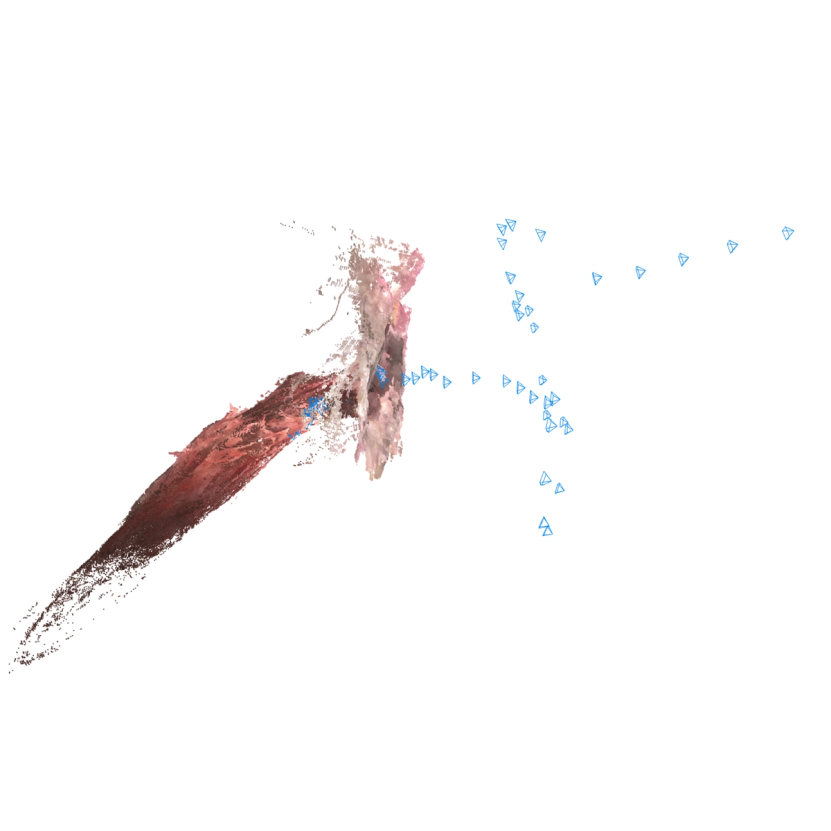
- INTRA-FIT develops a fully digital workflow for manufacturing patient-specific tracheostomy tubes. The project combines endoscopic imaging, AI-assisted 3D reconstruction, computer vision, and additive manufacturing to replace conventional CT-based or manual fitting procedures with a precise, radiation-free, and automated process for personalized tracheostomy care.
- Grant number: 13GW0849B
- Status: ongoing
- Timeframe: 2026–2029 (36-month project)
- Funding: Funded by the German Federal Ministry for Research, Technology and Space (BMFTR) under the KMU-innovativ: Medizintechnik funding programme
- Goal: To establish a fully digital process chain for the design and production of patient-specific tracheostomy tubes, enabling faster, safer, and more cost-effective personalized treatment while improving patient comfort and reducing complications associated with standard devices
- ImFusion's role: We develop the image processing and 3D reconstruction pipeline for reconstructing patient-specific tracheal anatomy from endoscopic video. This includes hybrid SLAM- and AI-based reconstruction methods, GPU-accelerated real-time processing, integration into the overall workflow, and validation of the developed algorithms for clinical use. The resulting software provides the foundation for the downstream design and manufacturing of individualized tracheostomy tubes.
- Consortium: Institut für Anaplastologie Velten & Hering (IfA, coordinator); ImFusion; Humboldt University of Berlin (HU); Rostock University Medical Center (UMR)



Robo-COP
Robotergestützte Neurochirurgie unter Verwendung von optischer Kohärenztomographie und Ultraschall-Aspiration - Robot-assisted neurosurgery using optical coherence tomography and ultrasonic aspiration
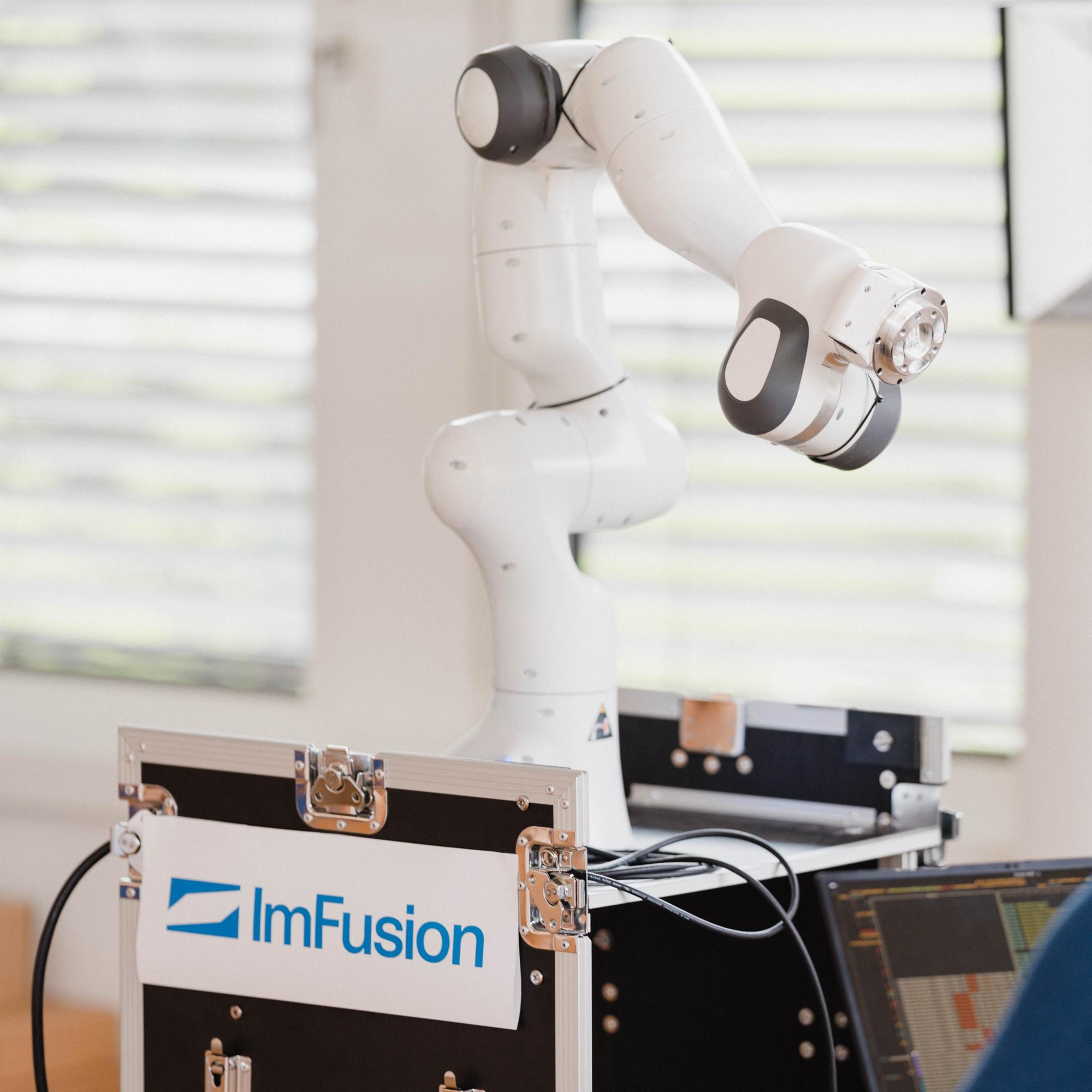
- Robo-COP develops a robot-assisted system for neurosurgical tumor resection that combines optical coherence tomography (OCT), ultrasound aspiration, medical image navigation, and robotics. The project aims to integrate real-time tissue characterization with robotic instrument guidance, enabling precise, image-guided and partially autonomous brain tumor resections while keeping the surgeon in control.
- Grant number: 13N17654
- Status: ongoing
- Timeframe: 2026-2029 (36-month project)
- Funding: Funded by the German Federal Ministry for Research, Technology and Space (BMFTR) under the funding initiative "Photonische und quantenbasierte Technologien für medizinische Diagnostik und Therapie"
- Goal: To demonstrate the technical feasibility of a robot-assisted, partially autonomous brain tumor resection system that combines multimodal tissue sensing, navigation, and robotic control. The project aims to improve the precision and completeness of glioblastoma resections while better preserving healthy brain tissue and reducing surgical complications
- ImFusion's role: We develop the navigation and image registration components required for robot-assisted intervention. This includes registration of preoperative imaging with the surgical scene, real-time local navigation to compensate for brain shift, visualization of multimodal imaging data, robot motion planning, and definition of safe resection paths. We also integrate these capabilities into the robotic workflow and evaluates the developed navigation software as part of the clinical demonstrator. The resulting technologies will further expand our SDK with OCT-MR registration and robot integration capabilities.
- Consortium: Söring GmbH; ImFusion; University Hospital Schleswig-Holstein (UKSH), Department of Neurosurgery; Medical Laser Center Lübeck (MLL)